

Five Android features I miss after switching to the iPhone 11 (and five I want to steal) - futrelltwithe
Information technology's that time of year again–when I get to test the latest iPhone against the best Android phones. There are triplet contenders this year: the Samsung Galaxy S10+, OnePlus 7T, and the approaching Google Pixel 4–and it's already formation up to be a knock-push down, drag-knocked out fight regular finisher than finis year's (when the iPhone XR eked out a win).
Beyond the major categories like the camera, assault and battery life, speed, and design that I'll explore in depth, thither are several smaller things I've noticed during the agone workweek that set the iPhone apart, whatsoever of which I love and others that I fille from Humanoid:
Features I miss from Android
Manual screen rotary motion
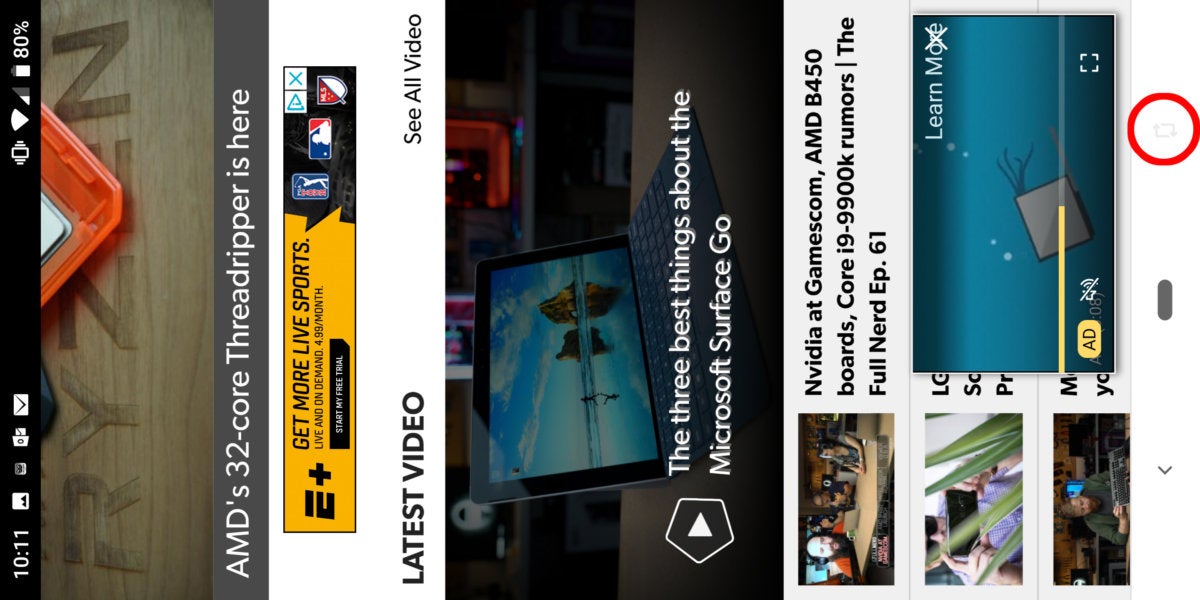
A couple of things are more than pestering than when you'atomic number 75 lying in bed nerve-racking to read a story on your phone and your sort flips from portrait mode to landscape because you tilt your phone a bit too much. Course, the iPhone 11, like all new phone, includes a lock chamber button that keeps your phone in whatever orientation course you select, simply if you want to change it back, you need to go on into the Control Center and water faucet the button.
 IDG
IDG On Humanoid phones, you can manually rotate your test even if you give orientation course lock turned on.
Mechanical man 9 solved this problem. When you turn along orientation lock, your phone leave still give you an option to switch temporarily if you involve to turn your call up to watch a video or play a brave. When you circumvolve your phone when orientation lock is along, a small icon wish come along in the bottom right corner. Exploit it, and your phone volition circumvolve without needing to grow off orientation lock.
Control finished notifications and a useful condition bar
No phone has delivered a perfect system for receiving notifications, but the iPhone's is much less pure than Android's. Plane in front you dive into the settings, the notification shade is far superior to Apple's full-blind notice center, and the little icons that appear in the status bar are way more usable than Orchard apple tree's now-you-see-it-now-you-don't approach. On my iPhone, I either have to arouse badges for everything OR dutifully check the notification center, neither of which is an appealing option.
Android also offers far amend control terminated when and which notifications appear. While it's in essence and on-or-off affair with iOS, connected my Android phones, I obtain farinaceous control over alerts via notice channels, wise grouping of unsounded notifications, and snoozing.
An app draftsman
I've been banging this beat for as long-lived as I've been using a smartphone. Apple still insists connected littering home screens with every app you've ever downloaded, while Android let's you keep as few as you want, tucking the others deep down an app draftsman accessible from the tooshie of the screen. Wherefore Apple refuses to make this an option is beyond my comprehension.
An always-on display
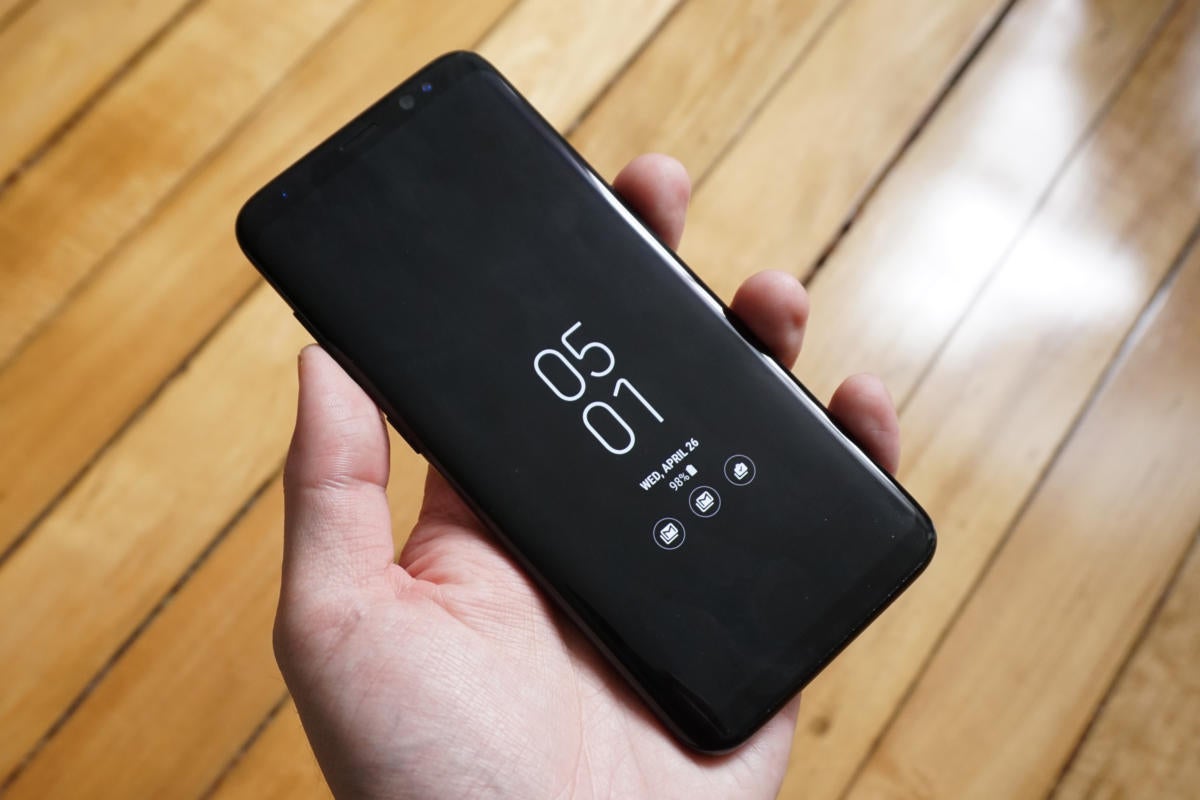
The boast I miss the about from Android is the forever-on display. On nearly every Android earphone, you can see the time, date, notifications, and other information even when the phone is soured, thanks to a broken-power, mostly black-and-white screen that stays on. I've lost count of how many multiplication I've looked over at my iPhone in the middle of the night only to see a dummy screen staring back at me. (In fact, I've started safekeeping an Android phone on my nightstand with great care I can see the time.) Even if it sheds a dinky bombardment lifespan, an ever-on display is fantastic on the list of features I want to see in iOS 12.
 Ryan Whitwam/IDG
 An forever-connected display would do wonders for the iPhone's useability.
Smart Lock
Android has had a feature for geezerhood that lets you use earbuds, watches, Wi-Fi networks, and other Bluetooth devices to keep your phone unlocked. So, if you'Ra wearing a paired smartwatch or are connected to a trusted network, your phone will stay unlocked. IT might only acquire a second or cardinal, but the savings sure do add up.
Features I want on Android
Face Gem State
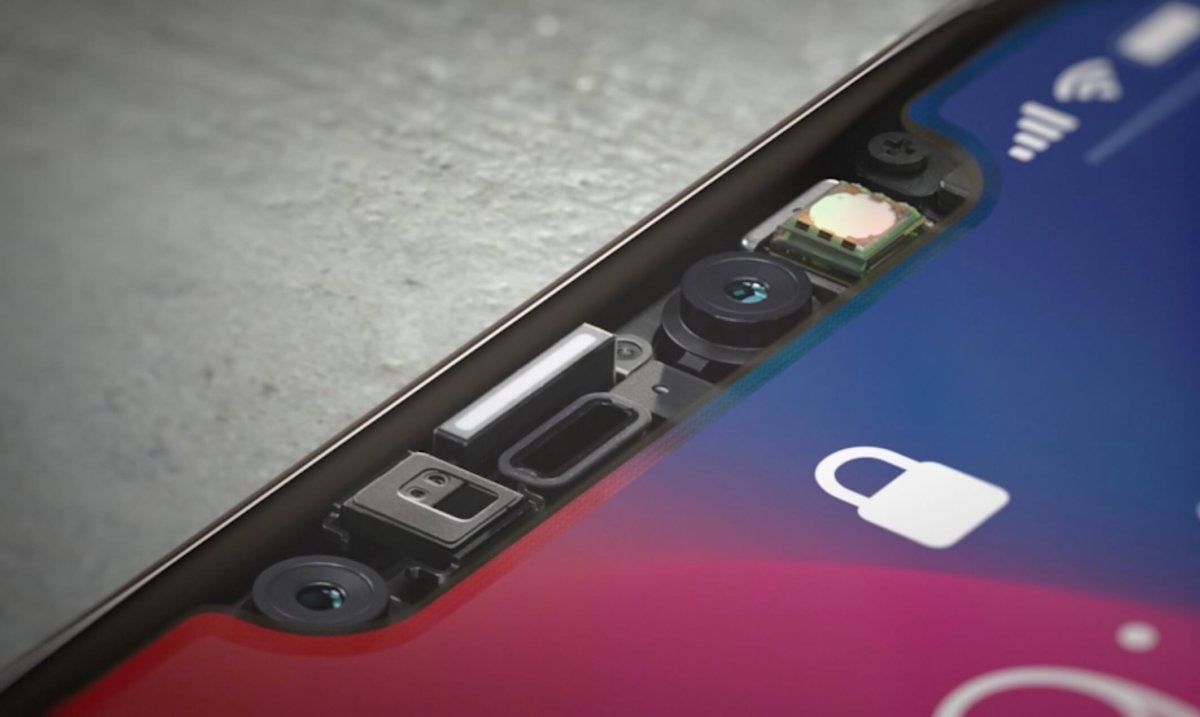
Since Apple launched the iPhone X with 3D surface acknowledgement biometric authentication, evenhanded a single U.S. Android sound (the LG G8) has attempted to double IT. The future Google Pixel 4 is rumored to comprise the second. That could start to alter the tide over, but the fact of the matter is, Apple is light years ahead of Android when information technology comes to biometrics. Face ID on the iPhone 11 is truehearted, easy, secure, and less finicky than before, and IT pains me to have to go hindermost to fingerprint sensors. Until Samsung starts focus on the next-propagation of biometrics, I'll be over here pining for Face ID on my Android phone.
 Apple
Apple The iPhone 11's mountain pass hides some killer tech.
Regular updates
It's no secret that Android phones lag iOS when it comes to updates. Arsenic if to drive that point home, I've accepted three updates alone in the week I've been testing the iPhone 11 to fix various bugs and stability issues. That's literally never happened to me on some Android phone, including the Pixel. Course, Mechanical man fans will scoff at the motive for 2 updates to a brand-new iPhone, but I'd rather have period updates than bugs that stick round for far too long.
Thoughtful gesture navigation
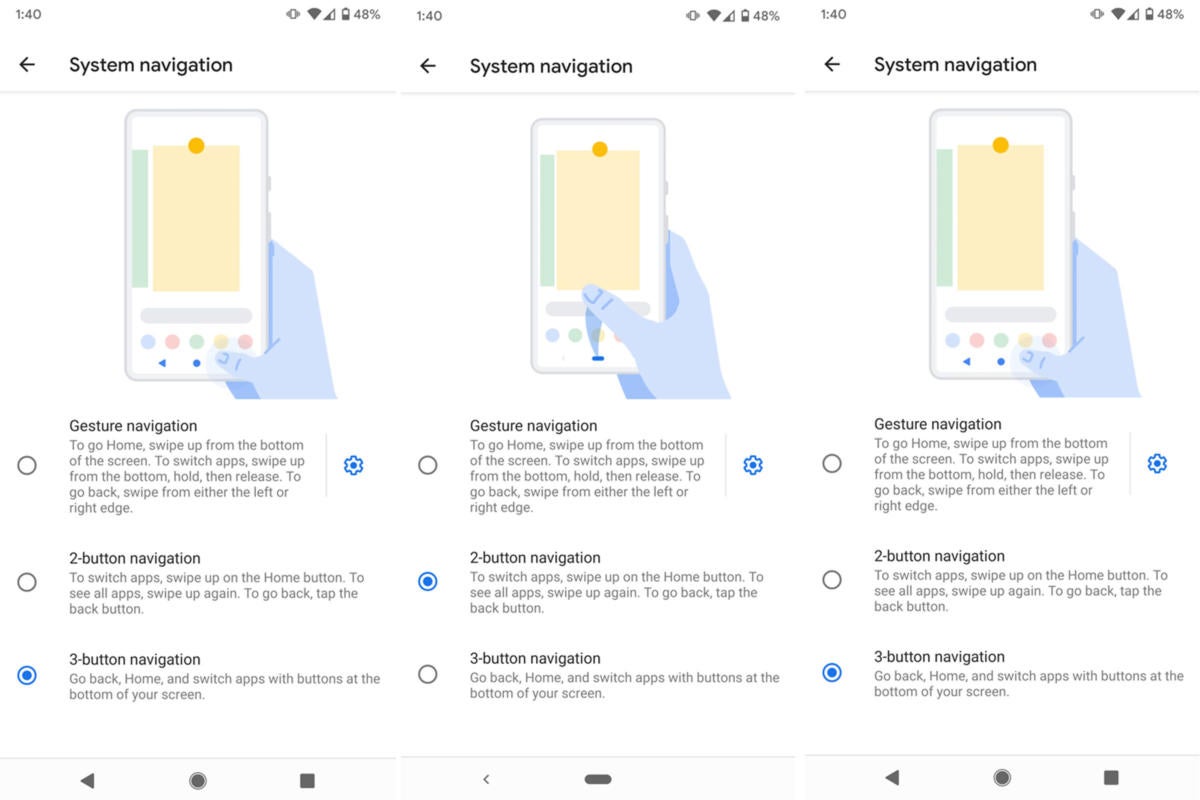
I know what you're rational: BUT ANDROID HAS GESTURE Seafaring! True, information technology does. But it's nowhere close as intuitive as information technology is along the iPhone. Mechanical man 10 has 2 different systems, while Samsung phones offer a completely different unrivaled. None of them are as straightforward or simple as the iPhone's method: Swipe back to come back. Snarf up to switch apps. Swipe right on the interlace screen or first rest home screen out for widgets. It's a system that's as smart on the iPhone 11 As information technology was on the X, and it makes the family button method seem antediluvian. Then again, Android's method feels like a heist that's at least two or three versions away from being finished.
 IDG
IDG This ain't IT, Google.
Messages
Where do I outset? Messaging on Android is in essence a mess. Modern features like encryption, typing prompts, stickers, and gimmick syncing are all either missing operating room incapable on Android phones. Messages on the iPhone is a advantageously-oiled automobile. It's at its first when you're texting other iPhone users, course, but even if you're texting a green bubble, the experience is vastly superior to anything Android offers.
Optimized execution
I'll go into greater depth happening the performance gap between iPhones and Humanoid phones in my upcoming article, but I put on't need to run a single benchmark to spirit the difference. It's not just the A13 Bionic processor versus the Snapdragon 855. Orchard apple tree optimizes the nether region proscribed of iOS, thusly every version feels untold faster than Android on Galaxy phones and Pixels. Instance in point: Right now I have 40 apps available in the App Switcher, while my Pixel 3 XL, which should be the best case for the latest Android software, shows honourable quintet. Quite frankly, the iPhone does to a greater extent with 4GB of RAM than the Galaxy S10+ does with 12. And that's not bully.

Source: https://www.pcworld.com/article/398131/android-phone-11-features-hate-love.html
Posted by: futrelltwithe.blogspot.com
0 Response to "Five Android features I miss after switching to the iPhone 11 (and five I want to steal) - futrelltwithe"
Post a Comment